
A U-value measures how much heat passes through a window, in watts per square metre per kelvin (W/m²K). Lower is better, and it is the figure Building Control checks first. Under Part L, replacement windows must reach a whole-window U-value of 1.4 W/m²K or lower, or WER band B or better as an alternative route (see our guide to Window Energy Ratings for how that band system works). You can see what a more efficient window does for your bills in the energy savings calculator.
What is a U-value?
The U-value is the rate of heat transfer through the window, and it is the single number that decides how energy efficient a window really is. A low number means less thermal conductivity through the glass and frame, so the window holds heat in well and your energy bills drop. It is measured the same way for windows and doors, which is why a quote often lists both. The figure that matters for Building Control is the whole-window U-value (Uw), which accounts for the glass, the spacer bar around the edge and the frame together, not just the centre of the glass (Ug). A salesperson quoting a flattering centre-pane figure is not quoting the number Part L is judged on, so always ask for the whole-window Uw. U-value, Low-E glass, argon gas and warm-edge spacer are trade shorthand rather than plain English, and each one has a one-line entry in our double glazing glossary, so keep the Double Glazing Glossary to hand if a term on this page is new to you. If the assembly itself is the unfamiliar part, how a double glazed sealed unit is built covers the two panes, the spacer and the gas fill before the numbers.
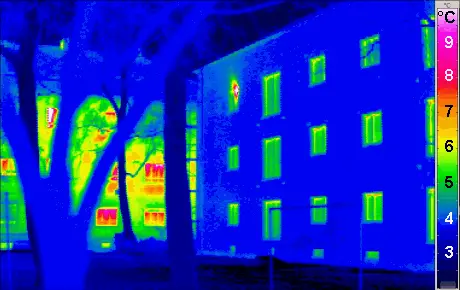
The unit is worth unpicking, because it makes the number concrete. W/m²K means watts lost per square metre of window for every degree of temperature difference between inside and out. The heat you are losing at any moment is the U-value multiplied by the glazed area, multiplied by that temperature difference. Pilkington works a useful example: a house with 20m² of single glazing at a Ug of 5.8, on a day 10 degrees colder outside than in, is losing 1,160 watts through the glass. That is more than one bar of an electric fire, running constantly. Re-glaze to a Low-E product at around 1.5 and the same house loses roughly 300 watts, close to a quarter of the original. Pilkington puts the broader figure at up to 25% of a home's heat escaping through the windows.
That arithmetic also explains something the sales patter tends to blur. The difference between 1.4 and 1.2 matters far less than the difference between 5.8 and 1.4. Once you are inside the modern range, the remaining gains are small in absolute terms. Getting from single glazing to compliant double glazing is the step that moves the needle; everything after that is refinement worth having but rarely worth a large premium.
| Glazing type | Typical U-value | Notes |
|---|---|---|
| Single glazing | ~4.8-5.8 W/m²K | Old, uninsulated. Loses the most heat. |
| Old double glazing (pre-2002) | ~2.8-3.2 W/m²K | No low-E coating or gas fill. |
| Modern A-rated double glazing | 1.0-1.4 W/m²K | Low-E glass, argon fill, warm-edge spacer. Meets Part L. |
| Triple glazing | 0.6-1.0 W/m²K | Best performance, around 0.8 typical. Heavier and pricier. |
Source: DGCC 2026 research, drawn from UK installer and manufacturer technical pages.
Always ask for the whole-window U-value, not the centre-pane glass figure. The glass alone might read 1.0, but with the frame and spacer the real number could be 1.4. That gap is where some firms massage their marketing.
Double Glazing Cost Calculator Team
How is a U-value measured?
A U-value is not a number the manufacturer picks. Approved Document L sets out how it has to be arrived at, and there are three permitted routes. The first is physical measurement, using the hot-box method set out in BS EN ISO 12567-1, where a sample window is mounted between a warm chamber and a cold one and the heat flow through it is measured directly. The second is calculation. The third, and the crudest, is to take a default value from Table 6e of the Standard Assessment Procedure, which is why some paperwork carries a suspiciously round number.
The calculation route carries a detail that almost nobody explains to homeowners, and it matters. The figure has to be calculated for a standard window 1.23m wide by 1.48m high, in the actual configuration of the window. For a casement, that standard configuration is a central vertical divider with one opening light and one fixed light. Every quoted U-value you will ever see is therefore a figure for that reference window, not for the window going into your wall.
The practical consequence is that your actual windows will not all perform at the quoted number. Frame conducts heat more readily than the middle of a sealed unit does, so the more frame a window has in proportion to its glass, the worse the real whole-window figure gets. A small window, or one chopped into several small lights with astragal bars, has proportionally far more frame and edge-of-glass than the reference window does, and will perform worse than the label. A large picture window has proportionally less and will do slightly better. None of this is a scandal, and it is the same rule for every manufacturer, but it is worth knowing before you conclude that a certified 1.2 W/m²K window will deliver 1.2 in a small bathroom opening.
Centre-pane (Ug) versus whole-window (Uw)
This is the single most common place where quotes mislead, so it is worth being precise. Ug is the centre-pane value: how the sealed glass unit performs in the middle, away from the edges. It is the flattering number, because the middle of a double-glazed unit is the best-performing part of a window. Uw is the whole-window value, covering the glass, the spacer bar around the edge of the unit and the frame together. Uw is always the higher, and therefore worse, of the two.
Pilkington states the position plainly: the building regulations require U-values for the complete window and not the centre-pane figure for the glass. So if a quote gives you a single number with no label, ask which one it is. A unit advertised at 1.0 may well be quoting Ug, and the whole window it goes into could land at 1.4 or worse once an ordinary frame and spacer are counted in. That is not necessarily a bad window, since 1.4 still meets the standard, but it is not the 1.0 you thought you were buying.
The other reason the distinction matters is that the two numbers are improved by different things. Better glass and a better gas fill move Ug. A better frame and a warm-edge spacer move Uw without touching Ug at all. An installer who only ever talks about the glass is only telling you about half the window.
What Part L requires in 2026
Approved Document L sets the floor for replacement windows in existing homes, and our guide to Building Regulations Part L covers how it is enforced. Since 15 June 2023 the full standard applies: the whole-window U-value must be 1.4 W/m²K or lower, or, on the alternative WER route, the window must be band B or better. The two are alternative compliance routes, so a window meeting either one passes. We do not claim band A is required. New build and the Future Homes Standard aim lower still, typically 1.2 W/m²K or below, but that is a stricter target than the replacement floor.
The wording in Approved Document L is worth quoting, because it also records what changed. Timber windows were given a temporary relaxation, and the document states that for timber windows a maximum U-value of 1.6 W/m²K or band C was permissible until 14 June 2023, and that from 15 June 2023 the full standard of 1.4 W/m²K or band B applies. That relaxation has now expired, so timber is held to the same floor as everything else. Older guidance quoting 1.6 for timber, or band C for anything, is describing a rule that no longer applies.
One further point on scope. This is the standard for replacing windows in an existing home, which is what most readers are doing. Extensions and new dwellings are assessed differently and to tighter numbers, and the compliance route runs through the whole building rather than the individual window. If your project is an extension rather than a straight swap, your installer or architect should be working to that route instead.
How do you work out an area-weighted U-value?
When a job mixes window types, building control looks at the average across the whole set rather than each window on its own. Multiply each window's area by its U-value, add those results together, then divide by the total area. A large picture window at 1.3 and a small awkward one at 1.6 can average out inside the limit, which is how a difficult opening gets signed off without being replaced twice. Ask your installer to show the calculation if any single window in the quote misses 1.4 on its own.
How modern glazing hits the target
Three components do the work. Low-emissivity (Low-E) glass carries a microscopically thin metal-oxide coating that reflects heat back into the room, cutting the centre-pane U-value by around 40%. A warm-edge spacer replaces the old aluminium spacer bar, which was a thermal bridge, and reduces heat loss and condensation at the edge of the unit. Argon gas in the cavity conducts heat less readily than air and helps the unit meet Part L without going to triple glazing. Together these let a good-quality double-glazed unit clear the 1.4 W/m²K bar comfortably, though such an airtight unit also needs trickle vents for background ventilation.
| Component | What it does | Effect on the U-value |
|---|---|---|
| Low-E coating | A metal-oxide layer that reflects long-wave heat back into the room while still letting light through | The largest single glass-side gain; around 40% off the centre-pane figure |
| Argon fill | Replaces the dry air in the cavity with a gas that conducts heat less readily | Roughly 0.2 W/m²K off the centre-pane Ug, varying with cavity size |
| Warm-edge spacer | A low-conductivity edge bar containing little or no metal | Improves the whole-window Uw by removing a thermal bridge at the edge |
| Frame and frame factor | The frame material, and how much of the opening is frame rather than glass | Decides how far the whole-window Uw sits above the glass Ug |
Argon figure from Pilkington thermal insulation FAQs; spacer and coating descriptions from Energy Saving Trust and Pilkington technical guidance, both checked 29 July 2026. The 40% Low-E figure is the DGCC 2026 research value.
Two details inside that table repay a closer look. The first is that there are two kinds of Low-E coating, and they are not interchangeable. Hard coats are applied on the float line while the glass is still hot, so the coating bonds to the surface and is durable enough to be handled and even used as a single pane. Soft coats are applied off-line in a vacuum process, perform better thermally, but are vulnerable to damage and oxidisation, which is why a soft-coat pane is always used inside a sealed unit with the coating facing the cavity. If a sealed unit fails and lets moisture in, a soft coat degrades. That is one of the reasons a blown unit is worth replacing rather than living with.
The second is the spacer. The old aluminium spacer bar was an efficient conductor running right around the perimeter of every sealed unit, which is exactly where you least want one. The Energy Saving Trust describes warm-edge spacers as containing little or no metal, and the gain shows up in two places: a slightly better whole-window number, and a warmer strip of glass at the edge of the pane. That second effect is the one homeowners actually notice, because the cold edge of an old unit is where condensation forms first. Raising the internal glass temperature is also why Low-E glass reduces condensation on the room side, and why you may start to see it on the outside of the glass instead. External condensation looks alarming and is in fact evidence that the window is doing its job.
What is a good U-value for a window?
Start from the floor. 1.4 W/m²K on the whole window is the legal minimum for a replacement, and any reputable installer should clear it as standard. Most quality A-rated double glazing lands in the 1.2 to 1.4 band, which is the sensible target for a normal UK home. Specifying below 1.0 means triple glazing in practice, with the extra weight and cost that brings.
On the glass itself, Pilkington's guidance is that good timber or uPVC frames combined with glass at a centre-pane Ug of around 1.1 W/m²K will generally be enough, while advising that you confirm the specific combination with the window manufacturer. That is a useful sanity check to have in your pocket: if a quote offers a centre-pane figure far above 1.1 and claims the whole window still meets Part L, ask to see the calculation.
What to ask for in writing is simple enough. Ask for the whole-window Uw for the specific product, not the glass alone. Ask whether that figure is measured or calculated, and on what configuration. Ask what the coating, gas fill and spacer are, so you know the three things in the table above are all present. And keep the paperwork. The whole-window figure is what a Building Control officer or a competent person scheme certificate is judged against, and it is what a buyer's surveyor may ask about years later. Our guide to getting three quotes covers how to compare specifications that are deliberately hard to compare.
Low-E glass, argon and a warm-edge spacer are the standard kit now, not an upgrade. If a quote leaves any of them out to look cheaper, the unit will struggle to meet Part L, and you will feel the difference on a cold morning.
Double Glazing Cost Calculator Team
Is 1.4 a good U-value for windows?
It is the pass mark, not a good score. 1.4 W/m²K is the worst whole-window figure Approved Document L allows on a replacement in England, so a quote offering 1.4 is telling you the window is legal rather than that it is good. Quality A-rated double glazing lands in the 1.2 to 1.4 band, and band A+ sits at about 1.2.
So 1.4 is fine on a normal replacement job and worth pushing on if you are paying a premium price. The practical test is what else the quote says: if a window reaches 1.4 with a low-emissivity coating, an argon fill and a warm edge spacer, the specification is sound. If it reaches 1.4 without them, ask to see the calculation. Below 1.0means triple glazing in practice, with the weight and cost that brings.
How to find the U-value of your existing windows
There are four ways to find out what you already have, in descending order of reliability. The first is the FENSA or CERTASS certificate from the installation, which lists the product and its rating; if the windows went in after 2002 and the work was certified, this exists even if you never saw it, and the scheme can reissue it. The second is the energy label, the rainbow-coloured A++ to G sticker, which is sometimes still on the glass in a spare room or a loft window where nobody peeled it off. The third is the spacer bar itself: the aluminium strip between the panes is usually stamped with the manufacturer and the unit spec, readable if you look at the edge of the glass in good light. The fourth, if none of those survive, is to date the windows and read the figure off the table above, which is what an EPC assessor does when there is no documentation — they record an age band, not a measurement.
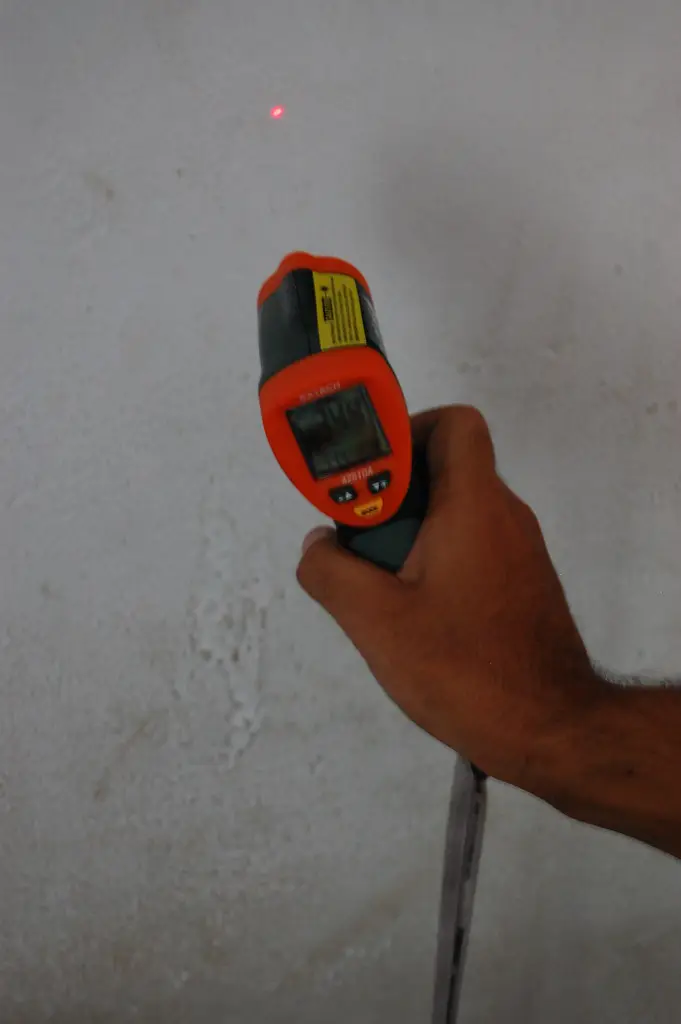
What you cannot do is measure it yourself. A U-value is established either in a hot box to BS EN ISO 12567-1 or by calculation on a standard 1.23m by 1.48m window, and neither is something to attempt with a thermometer. If the number matters for a grant application or a building control sign-off, ask the installer for the certified figure in writing.
Typical U-values by frame material
The glazing does most of the work, but the frame moves the whole-window figure enough to matter when you are close to the Part L limit. In a modern A-rated double-glazed unit at 1.0 to 1.4 W/m²K, uPVC and timber frames sit at the better end of that band because both are naturally poor conductors. Aluminium conducts heat readily, so an aluminium window only reaches the same range when the frame is thermally broken, that is built in two halves separated by an insulating barrier. A cheap aluminium frame without that break will pull the whole-window U-value up even behind good glass, which is the single most common reason a slim-sightline window fails to hit the number its glass suggested. Ask for the whole-window Uw for the exact frame and glass combination you are being quoted, not the centre-pane figure and not a range for the range.
U-value versus R-value: what is the difference?
They measure the same physics from opposite ends. U-value is the rate heat escapes, so lower is better. R-value is resistance to heat escaping, so higher is better. One is the reciprocal of the other: R equals 1 divided by U, and a window at 1.4 W/m²K has an R-value of about 0.71 m²K/W.
The reason it confuses people is geography. UK and European window specifications are written in U-values, while North American ones are usually quoted as R-values, and insulation products sold in the UK are often labelled with R-values even though the windows next to them are not. If a product is sold to you on its R-value, convert before you compare, and check whether the figure covers the whole window or only the glass.
U-values and your EPC
The Energy Performance Certificate rewards lower heat loss, so glazing feeds into it. Replacing single glazing, or tired pre-2002 double glazing, with A-rated units improves the glazing element of the assessment and can contribute to a better EPC band, alongside the insulation and heating measures you might tackle first. It is rarely a single-band jump on windows alone, but it counts, and a stronger EPC can matter when you sell or let, especially for landlords facing the EPC C standard by 2030. It is also about to count for more, because the way EPCs are calculated is being replaced by one that scores fabric performance as a headline metric in its own right rather than folding it into a running-cost estimate.
Double or triple glazing for the U-value?
Triple glazing pushes the U-value lower still, to roughly 0.6 to 1.0 W/m²K, but it is heavier and pricier, and good A-rated double glazing already clears Part L. Triple glazing earns its place mainly where you need a whole-window U-value below 1.0, such as a passive-house design or a very exposed plot. Our double versus triple glazing comparison works through when the extra pane pays off.
Two caveats are worth knowing before you pay for the third pane. The Energy Saving Trust puts triple glazing at around 20% more expensive than double, which is the easy part to plan for. The less obvious one is acoustic: Pilkington notes that triple glazing is heavier and thicker and offers little in terms of acoustic performance if all three panes are the same thickness. If noise rather than heat is your actual problem, a well-specified acoustic double-glazed unit with panes of differing thickness will usually beat a standard triple unit, and cost less. Buy triple glazing for the U-value, not for the quiet.
Get quotes with the U-value written in
A replacement window has to hit 1.4 W/m²K or better to be compliant, and that number belongs on the quote rather than in a conversation. Tell us what you need and Leads 2 Trade will arrange quotes from installers covering your postcode.
Ask for the whole-window U-value, not the centre-pane figure. They are different numbers and the centre-pane one always looks better, so a quote that gives you only that is telling you the flattering half of the story.
Frequently asked questions
Under Part L (Approved Document L), replacement windows in existing homes must reach a whole-window U-value of 1.4 W/m²K or lower. Compliance is assessed on the whole-window figure (Uw), which accounts for the glass, the spacer bar and the frame, not just the centre of the glass.
No. A U-value measures only heat loss. A Window Energy Rating (WER) is a broader band, from A++ to G, that also factors in solar heat gain and air leakage. Part L accepts WER band B or better as an alternative compliance route to the 1.4 W/m²K U-value target. Our guide to Window Energy Ratings covers how the band system works and what each letter means.
Lower is better. Single glazing is around 4.8 to 5.8 W/m²K, modern A-rated double glazing is 1.0 to 1.4 W/m²K, and triple glazing reaches 0.6 to 1.0 W/m²K. Anything at or below the Part L limit of 1.4 W/m²K is fit for a replacement window.
Low-emissivity (Low-E) glass has a microscopically thin metal-oxide coating that reflects heat back into the room. Soft-coat Low-E cuts the centre-pane U-value by around 40%, which is why it is used as standard in Part L-compliant double glazing.
Yes. Argon conducts heat less readily than the dry air used as standard in a sealed unit. Pilkington puts the effect at roughly 0.2 W/m²K off the centre-pane Ug value, varying with the cavity size. That is a useful contribution rather than a transformation, so treat argon as one part of the package alongside Low-E glass and a warm-edge spacer rather than the thing that gets a window through Part L on its own.
Approved Document L allows two routes. The U-value can be measured physically using the hot-box method set out in BS EN ISO 12567-1, or it can be calculated for a standard window 1.23m wide by 1.48m high in the actual configuration of the window. For a casement that standard configuration is a central vertical divider with one opening light and one fixed light. A default value from Standard Assessment Procedure Table 6e can also be used.
Building Regulations are judged on the whole window, not the glass alone, so the centre-pane figure is a specification detail rather than the compliance number. Pilkington's guidance is that a good timber or uPVC frame combined with glass at a centre-pane Ug of around 1.1 W/m²K will generally be enough, but it advises confirming with the window manufacturer for a specific product. Ask for the whole-window Uw as well, because that is the number Building Control checks.
They can. The Energy Performance Certificate rewards lower heat loss, so replacing single or old double glazing with A-rated units can lift the glazing element of the assessment and contribute to a better EPC band, alongside insulation and heating measures.